


The rotary speed of the table in a Rotary Table LSR Injection Moulding Machine plays a crucial role in the overall efficiency and quality of the injection - molding process. As a supplier of Rotary Table LSR Injection Moulding Machines, I am well - versed in the factors that influence this speed and its significance in the production environment.

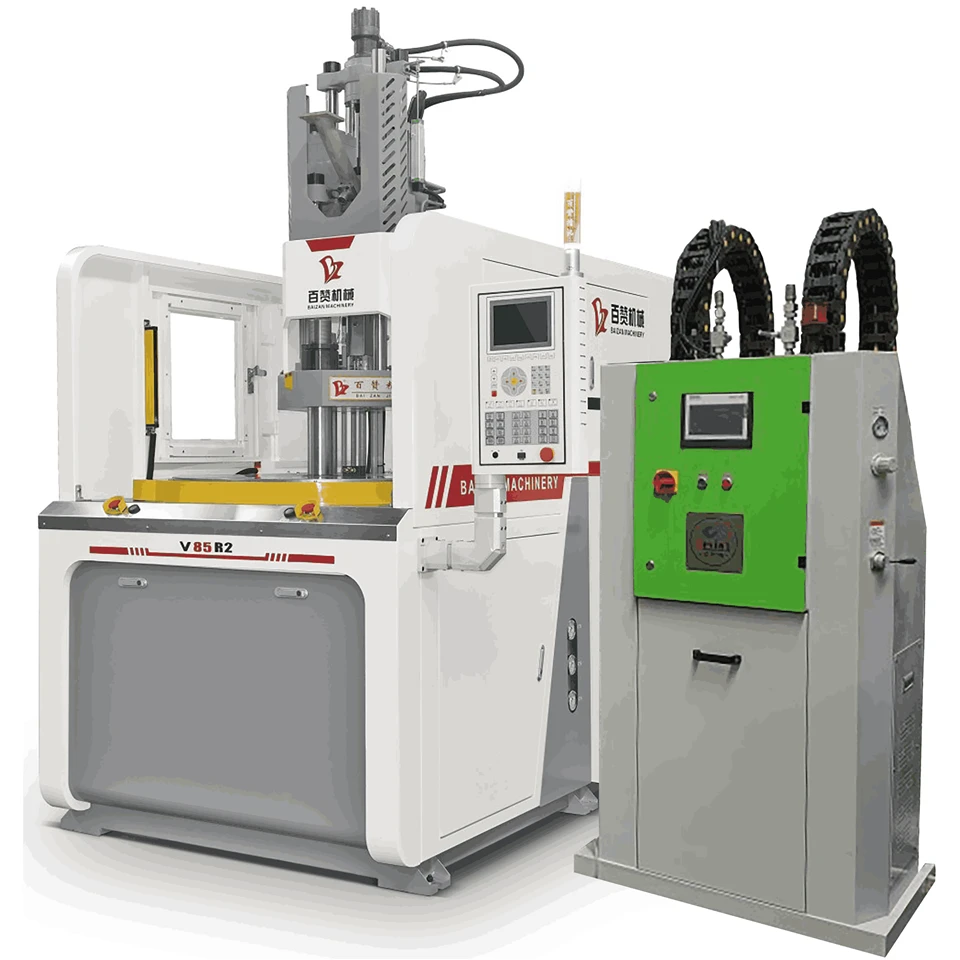
Understanding the Basics of Rotary Table LSR Injection Moulding Machines
A Rotary Table LSR (Liquid Silicone Rubber) Injection Moulding Machine is a specialized piece of equipment designed for the efficient production of silicone rubber parts. The key component, the rotary table, rotates to move different molds through various stages of the injection - molding process, such as injection, curing, and demolding.
Rotary Table LSR Injection Moulding Machine
The process starts with the injection of liquid silicone rubber into the mold cavities. Once the injection is complete, the table rotates to bring the filled molds to the curing station, where the silicone rubber is heated to a specific temperature to solidify. After curing, the table rotates again to the demolding station, where the finished parts are removed from the molds.
Factors Influencing the Rotary Speed
The rotary speed of the table can be affected by several factors. Firstly, the size and weight of the molds installed on the table are significant determinants. Heavier and larger molds require more torque to rotate, which can limit the maximum achievable speed. If the table is forced to rotate too quickly with heavy molds, it may cause mechanical stress on the rotating mechanism, leading to premature wear and tear or even mechanical failures.
Secondly, the curing time of the liquid silicone rubber is a critical factor. The rotary speed must be adjusted so that the molds spend an appropriate amount of time in the curing zone. If the table rotates too fast, the silicone rubber may not have sufficient time to cure properly, resulting in defective parts. Conversely, if the speed is too slow, the production cycle time will increase, reducing the overall productivity of the machine.
The complexity of the parts being molded also impacts the rotary speed. Parts with intricate designs may require more precise injection and curing processes. In such cases, the machine may need to operate at a slower speed to ensure that the silicone rubber fills the mold cavities completely and cures uniformly.
Recommended Rotary Speeds
There is no one - size - fits - all answer when it comes to the ideal rotary speed for a Rotary Table LSR Injection Moulding Machine. However, based on years of experience in the industry, we can provide some general guidelines.
For small - to medium - sized molds with simple part designs, a rotary speed in the range of 5 to 10 revolutions per minute (RPM) is often sufficient. At this speed, the machine can achieve a good balance between productivity and part quality. The table rotates at a pace that allows the injection, curing, and demolding processes to be carried out smoothly without causing any stress on the machine components.
When dealing with larger molds or more complex part geometries, the rotary speed may need to be reduced to 2 to 5 RPM. This slower speed gives the liquid silicone rubber more time to flow into the mold cavities and ensures a thorough curing process.
It is important to note that these are only approximate values. The actual optimal speed for a particular application should be determined through a combination of theoretical calculations, trial runs, and continuous process optimization.
Measuring and Adjusting the Rotary Speed
Modern Rotary Table LSR Injection Moulding Machines are equipped with advanced control systems that allow for precise measurement and adjustment of the rotary speed. These control systems typically use sensors to monitor the rotational speed of the table. The operator can input the desired speed through a user - friendly interface, and the machine will automatically adjust the motor settings to achieve the set speed.
During the initial setup of the machine, it is essential to conduct test runs at different speeds to determine the most suitable operating conditions. The quality of the molded parts, the production cycle time, and the overall performance of the machine should be carefully evaluated during these test runs. Based on the results, the rotary speed can be fine - tuned to optimize the production process.
The Impact of Rotary Speed on Productivity and Quality
The rotary speed of the table has a direct impact on both the productivity and quality of the injection - molding process. A higher rotary speed can significantly reduce the production cycle time, leading to an increase in the number of parts produced per hour. This is particularly beneficial for high - volume production runs, where time is money.
However, it is important not to sacrifice quality for speed. If the rotary speed is too high, as mentioned earlier, the parts may not cure properly, leading to defects such as incomplete filling, air bubbles, or poor surface finish. These defects can result in a high rejection rate, which ultimately reduces the overall efficiency of the production process.
On the other hand, a slightly slower speed may result in a longer production cycle time, but it can often lead to better part quality. By allowing more time for the injection and curing processes, the risk of defects is minimized, and the quality of the finished parts is improved. This is especially important for applications where precision and reliability are crucial, such as in the medical or aerospace industries.
Related Products and Technologies
In addition to the Rotary Table LSR Injection Moulding Machine, our company also offers a range of related products.
The Silicone Rubber Molding Machine is a traditional option for those who require a reliable solution for silicone rubber molding. It provides a cost - effective way to produce silicone parts with good quality.
Our Servo LSR Injection Machine incorporates advanced servo - drive technology, which offers greater control over the injection process. This results in more precise injection volumes and better repeatability, especially when dealing with high - precision parts.
The LSR Injection Molding Machine is designed specifically for the injection molding of liquid silicone rubber. It is equipped with features such as precise temperature control and a high - pressure injection system, which are essential for producing high - quality silicone parts.
Finally, the Vertical LSR Injection Machine offers a vertical configuration, which is ideal for applications where space is limited or where certain part geometries require a vertical injection approach.
Contact Us for Procurement and Consultation
If you are interested in learning more about the Rotary Table LSR Injection Moulding Machine or any of our other products, we encourage you to reach out. Our team of experts is ready to assist you in finding the most suitable machine for your specific production needs. We can provide detailed information about the machine specifications, performance, and cost - effectiveness. Whether you are looking to upgrade your existing production line or start a new project, we are here to help.
We understand that every customer's requirements are unique, and we are committed to providing customized solutions. By working closely with you, we can optimize the rotary speed and other parameters of the machine to ensure that you achieve the best possible production results.
In conclusion, understanding the rotary speed of the table in a Rotary Table LSR Injection Moulding Machine is essential for achieving efficient and high - quality production. By considering the factors that influence the speed, measuring and adjusting it accurately, and balancing productivity and quality, you can make the most of this advanced injection - molding technology.
References
- Handbook of Plastic Injection Molding, Second Edition, by Ohnhert G. Boehm;
- Injection Molding Handbook, by Dominik M. Utracki.


