


Slide Table Vertical Injection Moulding Machine
Product Overview
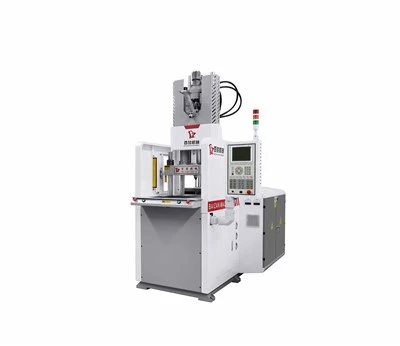
The slide table vertical injection moulding machine is engineered for insert moulding and overmolding applications where manual or automated component loading occurs completely outside the clamping zone. Featuring a reciprocating slide table in single-station shuttle or dual-station transverse configurations, this machine allows operators to place metal inserts or substrates into the lower mold while another cavity is undergoing the injection and cooling cycle. This setup eliminates idle cooling time, directly increasing production output for multi-part assemblies in automotive, electronics, and medical industries.


Product Categories
Latest Products


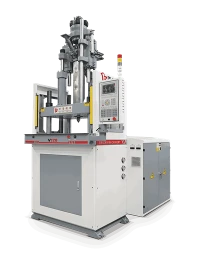
Machine Structure & Configuration
Clamping Unit: Direct-acting vertical hydraulic clamping system with a rigid four-tie-bar structure, ensuring uniform pressure distribution and minimal platen deflection under high tonnage.
Slide Mechanism: Precision linear guideway coupled with a high-torque hydraulic motor or servo-driven rack-and-pinion drive, maintaining repetitive positioning accuracy within ±0.02 mm.
Injection Unit: PEEK- and PA-compatible barrel and screw assemblies featuring specialized nitrided or bimetallic treatments for superior wear and corrosion resistance when processing engineering plastics.
Hydraulic & Electrical Layout: Modular hydraulic manifold blocks featuring internationally recognized proportional pressure and flow control valves, paired with an industrial-grade PLC controller and a multi-axis color touchscreen interface.
Key Features
Non-Productive Time Reduction:
Operator safety and part loading occur concurrently with the injection cycle, reducing total cycle time by up to 30% compared to standard stationary-table vertical presses.
Precise Insert Locating:
Elimination of angular misalignment through rigid slide locking pins that engage automatically prior to mold closure.

Enhanced Operator Safety:
The loading station is positioned completely clear of the upper mold drop zone, protected by advanced safety light curtains and dual-hand start interlocks.
Multi-Zone Temperature Control:
PID closed-loop barrel temperature controllers with solid-state relay outputs, maintaining thermal stability within ±1°C.
Technical Specifications
|
Model Parameter |
Unit |
VMS-35SL |
VMS-55SL |
VMS-85SL |
VMS-120SL |
|
Clamping Force |
kN (Tons) |
350 (35) |
550 (55) |
850 (85) |
1200 (120) |
|
Injection Capacity (PS) |
g |
45 - 85 |
85 - 140 |
140 - 230 |
230 - 350 |
|
Screw Diameter |
mm |
22 / 25 |
28 / 32 |
35 / 38 |
40 / 45 |
|
Injection Pressure |
MPa |
215 / 166 |
218 / 168 |
220 / 185 |
210 / 165 |
|
Slide Table Size |
mm |
450 x 600 |
500 x 700 |
600 x 850 |
700 x 1000 |
|
Slide Stroke |
mm |
450 |
500 |
600 |
700 |
|
Max. Mold Height |
mm |
150 - 300 |
180 - 350 |
200 - 400 |
250 - 480 |
|
Motor Power |
kW |
5.5 |
7.5 |
11.0 |
15.0 |
Applications
Automotive Wire Harnesses & Sensors:
Overmolding lead frames, connector pins, and electronic sensor housings using engineering resins such as PBT, PA66, or PP.
Medical Consumables:
Producing multi-material micro-fluidic connectors and elastomer-sealed surgical instrument grips.
Low-Voltage Electrical Components:
Encapsulating copper busbars, switches, and miniature circuit breaker terminals.
Hardware-Plastic Integration:
Embedding threaded brass inserts into consumer appliance housings and structural plastic brackets.
Manufacturing & Quality Control
Bed & Platen Machining:
Machine frames and platens undergo high-temperature annealing to relieve internal welding stresses, followed by precision finishing on large-scale CNC floor boring mills to guarantee platen parallelism within 0.05 mm/m.
Hydraulic Testing:
Every hydraulic circuit undergoes rigorous pressure endurance testing at 1.5 times working pressure to eliminate internal and external leakage risks.
Electrical Inspection:
Control panels are wired strictly according to industrial electrical safety standards, with all safety circuits subjected to comprehensive response timing verification.
Dry Cycle Run-off:
Each press undergoes a continuous dry run test before packaging to monitor slide positioning repeatability and hydraulic oil thermal stability.
OEM & Customization
Table Configurations:
Single slide (1 loading position, 1 molding position), dual shuttle (1 loading position, 2 alternating molding positions), or rotary index tables.
Automation Integration:
Mechanical pick-and-place unloader integration, pneumatic core-pull circuits (up to 4 independent circuits), and standard robot interfaces.
Specialized Plasticizing Units:
Hardened bimetallic screws and cylinders tailored for abrasive engineering plastics containing glass fibers.
Custom Voltage & Compliance:
Electrical configurations tailored to regional industrial power standards and safety directives.
FAQ
We are one of the most professional slide table vertical injection moulding machine manufacturers and suppliers in China. We warmly welcome you to buy customized slide table vertical injection moulding machine at competitive price from our factory. If you have any enquiry about pricelist and quotation, please feel free to email us.
injection molding machine with sliding table, low table injection machine, Low Sliding Table Vertical Injection Moulding Machine