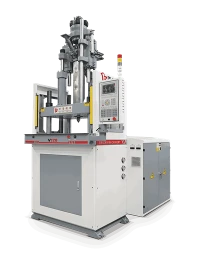
Key technologies of all-electric injection molding machines include servo drive technology, high-precision transmission mechanisms, clamping mechanisms, and advanced control systems. Servo drive technology utilizes high-performance servo motors and advanced control algorithms to achieve precise motion control of injection, mold closing, and ejection.
High-precision transmission mechanisms, such as ball screws or synchronous belts, efficiently and accurately convert the rotary motion of the servo motor into linear motion. Clamping mechanisms commonly employ toggle-type force-multiplying clamping mechanisms, utilizing the lever principle to generate a large clamping force with a relatively small servo motor output. Some high-end models adopt a direct-drive structure, directly integrating the servo motor into the injection or clamping device, reducing intermediate transmission components, thereby reducing mechanical losses and improving response speed and control accuracy.
Advanced control systems employ integrated CNC control systems to achieve complex motion program setting, parameter monitoring, and data acquisition and analysis; the control system can also utilize soft PLC technology and SERCOS motion control bus technology to improve system scalability, reliability, and maintainability.